Moving to Canada can open new career opportunities, especially for newcomers interested in healthcare and wellness. For people with a background in healthcare, fitness, rehabilitation, or hands-on care, becoming a Registered Massage Therapist (RMT) can be an attractive career option.
However, the pathway to becoming an RMT in Ontario involves more than completing a Massage Therapy course. Newcomers need to understand education requirements, credential assessment, examinations, registration, and professional standards.
If you are researching the RMT career newcomers Canada pathway, this guide explains the process in simple terms and highlights how Ruhani College can fit into the education journey.
Understanding the RMT Profession in Ontario
Massage Therapy is a regulated healthcare profession in Ontario. The College of Massage Therapists of Ontario (CMTO) regulates the profession and protects the titles Registered Massage Therapist (RMT) and Massage Therapist (MT).
Only people registered with CMTO can legally practise Massage Therapy in Ontario. Completing a Massage Therapy program by itself does not give a graduate permission to practise.
For newcomers, this is one of the most important things to understand before choosing a program.
Your previous experience may be useful, but you still need to meet Ontario’s registration requirements.
Why Consider an RMT Career as a Newcomer?
Massage Therapy can offer newcomers a career that combines healthcare knowledge, hands-on skills, and direct client interaction.
Depending on their interests and professional goals, RMTs may work in:
- Multidisciplinary healthcare clinics
- Rehabilitation centres
- Wellness clinics
- Sports and fitness facilities
- Private practices
- Massage therapy clinics
- Other healthcare and wellness environments
This variety can be useful for newcomers who want to build a career in healthcare while developing a professional network in Canada.
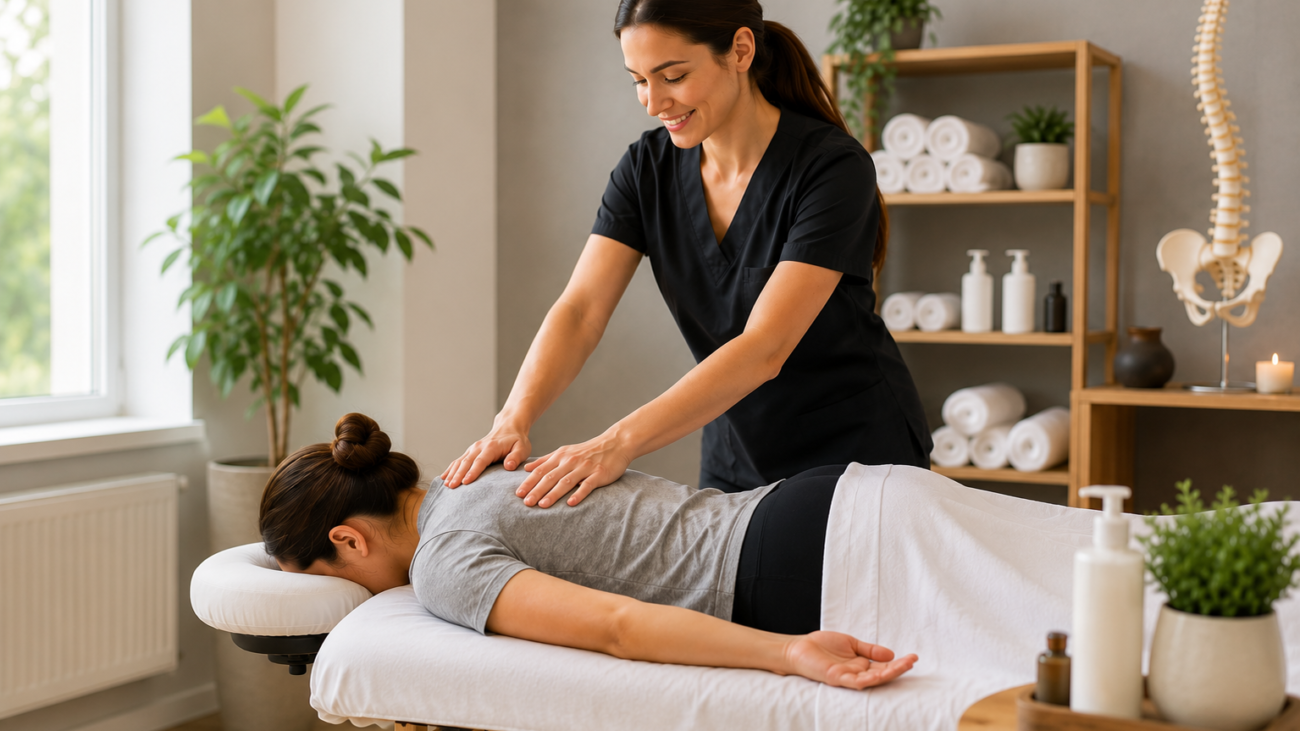
Ruhani College describes its RMT program as career-focused education combining theory, hands-on practice, and clinical experience. The college also operates a student massage clinic that is open to students, staff, and the public.
Your Previous Education Matters
The right pathway depends on your educational and professional background.
There are generally two situations for newcomers:
You already studied Massage Therapy outside Canada.
In this case, your education may be assessed to determine whether it meets Ontario’s requirements.
You are starting Massage Therapy education from the beginning.
In this situation, you can explore an eligible Ontario Massage Therapy education program and then work toward the remaining CMTO requirements.
Understanding which category you fall into can save time and help you avoid unnecessary education.
If You Are an Internationally Educated Massage Therapist
If you previously studied Massage Therapy outside Canada, you may not necessarily have to repeat your entire education.
CMTO currently provides two ways for internationally educated applicants to meet the education requirement. You can request an assessment of your education through the Massage Therapy Education and Credential Assessment (MTECA) process, or you may apply for advanced standing at an Ontario Massage Therapy program.
Advanced standing means an Ontario school may review your previous education and determine whether some courses or credits can be recognized.
The outcome depends on your individual education and the requirements of the institution.
What Is the MTECA Process?
MTECA is designed to assess Massage Therapy education completed outside Canada.
The purpose is to determine whether an applicant’s previous education is equivalent to the education required in Ontario.
If your previous education is not considered equivalent, you may need additional education before moving forward.
For newcomers, it is useful to start collecting important documents early, including transcripts, certificates, course information, and evidence of previous professional experience where applicable.
Having your documentation organized can make the process easier.
Starting Your RMT Education in Ontario
Not every newcomer has previous Massage Therapy education.
Some may have worked in completely different industries before moving to Canada. Others may have healthcare experience but want to transition into Massage Therapy.
For these students, completing an Ontario Massage Therapy diploma may be the appropriate starting point.
CMTO currently states that a Massage Therapy diploma from a recognized Ontario education program meets the education requirement. However, an important regulatory change is coming into effect on January 1, 2027. From that date, students will need to enroll in a Massage Therapy program accredited by the Canadian Massage Therapy Council for Accreditation (CMTCA) for the diploma to meet the CMTO education requirement.
Because requirements can change, students should confirm the current status of any program directly with the school and CMTO before enrolling.
Studying RMT at Ruhani College
For newcomers who are beginning their Massage Therapy education in Ontario, Ruhani College offers a Registered Massage Therapist program.
The college’s program focuses on both theoretical and practical learning. Students can develop knowledge in areas such as anatomy, physiology, massage techniques, assessment, pathology, and professional practice.
Ruhani College also emphasizes hands-on training and clinical experience, giving students opportunities to practise their skills in a supervised educational environment.
The college currently lists its Registered Massage Therapist program as 2,236 hours in its course listings.
For newcomers, practical training can be particularly valuable because it provides an opportunity to become comfortable with Canadian client communication, professional expectations, and clinical environments.
What Do RMT Students Learn?
Massage Therapy education involves much more than learning different massage techniques.
Students need to understand the human body and learn how to assess clients before developing an appropriate treatment approach.
Depending on the program curriculum, students may study:
- Anatomy and physiology
- Massage therapy techniques
- Musculoskeletal conditions
- Pathology
- Client assessment
- Treatment planning
- Professional communication
- Ethics
- Contraindications
- Clinical practice
These subjects help students develop the foundation needed for professional Massage Therapy practice.
For someone new to Canada’s healthcare system, this education can also provide valuable exposure to Canadian professional standards.
Developing Communication Skills
Communication is especially important for newcomers entering a client-facing healthcare profession.
RMTs regularly communicate with clients about their symptoms, health history, treatment goals, comfort, consent, and after-care recommendations.
Being able to communicate clearly and professionally can help build trust.
Students can use their training period to become more comfortable with:
- Taking client histories
- Asking appropriate questions
- Explaining treatment
- Obtaining informed consent
- Maintaining professional boundaries
- Recording treatment information
- Communicating with other healthcare professionals
Strong communication skills can become an important part of building a successful RMT career.
The CMTO Certification Exams
Completing the required education is only one part of the registration pathway.
CMTO currently requires applicants to successfully complete two certification examinations administered by Prometric:
- Multiple-Choice Question (MCQ) examination
- Objectively Structured Clinical Evaluation (OSCE)
The examinations assess knowledge and clinical competency relevant to Massage Therapy practice.
For students, preparing for these examinations should be part of their overall career plan.
A strong understanding of anatomy, assessment, treatment techniques, pathology, and professional standards can help students prepare for the next stage after graduation.
Completing the Jurisprudence Requirement
Applicants must also complete CMTO’s Jurisprudence Program.
This helps applicants understand the legal, ethical, and professional responsibilities associated with practising Massage Therapy in Ontario.
For newcomers, this can be especially useful because healthcare regulations and professional expectations may differ significantly from those in their home country.
Understanding Ontario’s professional standards is an important part of becoming a safe and responsible practitioner.
Registration Requirements for Newcomers
After completing the applicable education and examination requirements, applicants must submit the required information and documentation to CMTO.
Current registration requirements can include:
- Education transcripts
- Vulnerable Sector Check
- Language fluency requirements
- CPR certification
- First Aid certification
- Professional liability insurance
- Government-issued identification
- Proof of authority to practise in Canada
- Registration fees
CMTO provides a detailed checklist for applicants, and requirements can change, so applicants should always check the current registration information before applying.
Language Skills and Professional Practice
For newcomers, language proficiency can be an important part of the transition into professional practice.
Massage Therapy involves regular communication with clients and other healthcare professionals. Students need to understand health-related terminology and communicate treatment information clearly.
Improving professional communication during school can therefore be just as valuable as learning hands-on techniques.
This includes becoming comfortable with:
- Anatomy terminology
- Client interviews
- Treatment explanations
- Documentation
- Professional conversations
- Healthcare-related communication
Building Your Canadian Professional Network
Education is only one part of starting a new career in Canada.
Networking can also help newcomers understand the local healthcare environment.
Students can begin building professional connections by:
- Connecting with classmates
- Speaking with instructors
- Participating in clinical training
- Attending professional events
- Learning about multidisciplinary clinics
- Exploring potential workplaces
- Following professional organizations
These relationships can help students learn more about different career settings and expectations.
Where Can RMTs Work?
After registration, RMTs can explore different professional environments.
Multidisciplinary Clinics
Working alongside physiotherapists, chiropractors, and other healthcare professionals can provide opportunities for collaboration and referrals.
Rehabilitation Settings
Some RMTs work in rehabilitation environments where Massage Therapy forms part of a broader approach to physical health and recovery.
Sports and Fitness
RMTs interested in athletics can explore opportunities in gyms, fitness facilities, sports environments, and wellness settings.
Private Practice
Some RMTs eventually choose to operate their own practice. This can provide greater control over scheduling, services, and business development, although it also involves additional responsibilities.
Challenges Newcomers Should Expect
The RMT career newcomers Canada pathway can be a positive opportunity, but it is important to understand the challenges involved.
Newcomers may need to:
- Understand Ontario’s regulatory system
- Have international credentials assessed
- Collect documents from their home country
- Complete additional education
- Prepare for certification exams
- Meet language requirements
- Learn Canadian professional standards
- Build a professional network
- Understand registration and insurance requirements
Planning these steps early can make the transition much smoother.
How Ruhani College Can Support Your Education Journey
For students starting their RMT education in Ontario, Ruhani College focuses on combining classroom learning with hands-on training.
The college states that its programs are designed around practical, career-focused education, and its RMT program includes clinical experience. Ruhani College also highlights its student massage clinic as a learning environment for students.
This practical approach can help students build confidence before entering professional practice.
However, students should always verify the program’s current regulatory and accreditation status before enrolling, particularly because Ontario’s Massage Therapy education requirements are changing in 2027.
A Simple RMT Pathway for Newcomers
For someone starting from the beginning, the pathway can generally be understood as:
Step 1: Research eligible Massage Therapy programs in Ontario.
Step 2: Confirm the program meets current CMTO education requirements.
Step 3: Complete the required Massage Therapy education.
Step 4: Prepare for the CMTO certification examinations.
Step 5: Complete the required Jurisprudence Program.
Step 6: Gather registration documents.
Step 7: Apply for CMTO registration.
Step 8: Begin practising only after receiving the appropriate registration.
For internationally educated applicants, the process may begin with MTECA or an advanced-standing application.
Frequently Asked Questions
Can newcomers become RMTs in Ontario?
Yes. Newcomers can pursue RMT registration if they meet the education, examination, and registration requirements established by CMTO.
Can international Massage Therapy education be recognized?
Yes, potentially. Internationally educated applicants can request an assessment through MTECA or explore advanced standing at an Ontario Massage Therapy program.
Do I need to repeat my entire education if I studied Massage Therapy abroad?
Not necessarily. Your previous education may be assessed, and you may have options for credential recognition or advanced standing.
Can I work as an RMT immediately after graduation?
No. Graduating from a program does not automatically authorize you to practise. You must complete the applicable CMTO registration requirements and receive registration first.
Is Massage Therapy regulated in Ontario?
Yes. CMTO regulates Massage Therapy in Ontario and protects the RMT and MT titles.
Why is practical training important?
Hands-on training helps students develop assessment, treatment, communication, and professional skills that are difficult to learn through textbooks alone.
Starting Your RMT Career in Canada
For newcomers, becoming an RMT can be a meaningful way to build a career in Canada’s healthcare and wellness sector. The process requires planning, but understanding each step can make the journey easier to manage.
If you already have Massage Therapy education from another country, start by reviewing the CMTO pathway for internationally educated applicants. Your previous education may be assessed through MTECA or considered for advanced standing.
If you are starting from the beginning, explore an eligible Ontario Massage Therapy program and carefully check its current regulatory status.
Ruhani College provides a practical RMT education pathway that combines theory, hands-on learning, and clinical experience. Its student massage clinic also gives students an opportunity to develop practical skills in a supervised environment.