
Confused about the difference between an Early Childhood Assistant (ECA) and an Early Childhood Educator (ECE) in Ontario? Compare their training requirements, responsibilities, registration, and career opportunities. Discover how Ruhani College’s 24-week Early Childhood Assistant diploma combines child development education with supervised field placement to help you start your childcare career.
Life as a Pre-Med Student: What to Expect in Your First Year
Starting a pre-med program can be an exciting step for students who are planning a future in medicine. But the first year can also feel very different from high school. You may be studying several science subjects at once, learning medical terminology, completing practical work, and developing the study habits needed for a demanding healthcare education pathway.
If you are researching pre-med student life Ontario, understanding what your first year may look like can help you prepare academically and mentally.
At Ruhani College, the Pre-Med Diploma Program is designed to give students a foundation in core sciences and medical-related subjects. The college currently lists the program as a 50-week program with online and in-person learning options and a 90-credit curriculum.
What Is Pre-Med?
Pre-med generally refers to an educational pathway designed to prepare students for further medical education. It is important to understand that “pre-med” is not the same thing as medical school.
Your pre-med studies can help build knowledge in subjects such as biology, chemistry, physics, mathematics, anatomy, physiology, and other medical sciences.
The exact requirements for entering medical school depend on the medical school and country you are applying to. Students should therefore check the admission requirements of their intended medical schools rather than assuming that every pre-med program provides automatic admission.
What Does the First Year Look Like?
Your first year is likely to be focused on building a strong academic foundation.
At Ruhani College, the published curriculum includes subjects such as:
- Biology
- General Chemistry
- Organic Chemistry
- Physics
- Calculus
- Biostatistics
- English
- Evidence-Based Research
- Medical Ethics
- Medical Psychology
- Medical Terminology
- Anatomy
- Histology
- Physiology
- Microbiology
- Pathology
The curriculum is divided into three semesters and includes laboratory and presentation components in several courses.
This means your first year is not simply about reading textbooks. You may also spend time working through practical exercises, laboratory activities, presentations, research, and medical science concepts.
A Typical Week as a Pre-Med Student
A typical week can vary depending on your class schedule and whether you study online, in person, or through a hybrid format.
A normal week might include:
Monday: Biology and chemistry classes, followed by reviewing notes.
Tuesday: Physics or mathematics, with time set aside for problem-solving.
Wednesday: Laboratory or practical learning and preparation for upcoming assignments.
Thursday: Medical science subjects such as anatomy, physiology, or pathology.
Friday: Research, presentations, assignments, and revision.
Weekend: Reviewing the week’s material, completing assignments, and preparing for upcoming assessments.
The important lesson is that pre-med students need to stay consistent. Leaving everything until the night before an exam can become overwhelming when several science subjects are being studied at the same time.
Balancing Different Science Subjects
One of the biggest changes students may experience is studying multiple science subjects simultaneously.
Biology requires understanding processes and systems. Chemistry often involves both concepts and calculations. Physics requires problem-solving and applying formulas. Mathematics requires regular practice.
You cannot always study these subjects in exactly the same way.
A useful approach is to divide your study time according to the subject:
- Use diagrams and active recall for biology.
- Practise calculations regularly for chemistry and physics.
- Work through problems rather than simply reading mathematics.
- Use flashcards for terminology.
- Review anatomy using labelled diagrams.
- Explain difficult concepts in your own words.
Finding the right study method early can make the rest of the year much easier.
Learning Medical Terminology
For many students, medical terminology is one of the first opportunities to become familiar with healthcare language.
Terms can initially seem complicated because they are often based on Latin or Greek roots. However, once you understand common prefixes, suffixes, and root words, medical vocabulary becomes easier to recognize.
Learning terminology can also make future subjects such as anatomy, physiology, pathology, and clinical sciences easier to understand.
This is one reason a structured pre-med curriculum can be useful for students who are beginning their healthcare education.
Anatomy and Physiology Can Be Challenging
Anatomy and physiology require students to understand how the human body is structured and how different systems function.
Instead of simply memorizing individual facts, students should try to understand how body systems connect.
For example, understanding the cardiovascular system becomes easier when you connect:
Heart → blood vessels → blood circulation → oxygen delivery → tissues and organs
This type of connected learning can help you remember information more effectively.
At Ruhani College, the published third-semester curriculum includes introductory anatomy and physiology along with histology, microbiology, and pathology.
Practical Learning and Labs
Science becomes much more meaningful when students can connect theory with practical learning.
Laboratory activities can help you understand concepts that may seem abstract when you only read about them.
Depending on the subject, practical learning may involve observation, experiments, demonstrations, data interpretation, or presentations.
Ruhani College’s Pre-Med curriculum lists laboratory components within subjects including organic chemistry, biology, physics, general chemistry, anatomy, histology, physiology, microbiology, and pathology.
For students considering a future healthcare career, this combination of theory and practical learning can help develop a more applied understanding of science.
Research Is Also Part of Student Life
Modern healthcare depends heavily on evidence and research.
That means pre-med students should learn how to find reliable information, understand research findings, and distinguish evidence from unsupported claims.
Ruhani College’s published curriculum includes Evidence-Based Research as well as Biostatistics.
These subjects can introduce students to concepts such as research methods, data interpretation, and evidence-based decision-making.
These skills can become increasingly valuable as students move into advanced healthcare education.
Managing Assignments and Exams
The workload can feel manageable at the beginning and become more demanding as subjects progress.
Good organization is therefore important.
Try keeping:
- A weekly study schedule
- A list of upcoming assessments
- Separate notes for each subject
- A revision calendar
- A list of difficult topics
- Regular review sessions
Instead of studying only before exams, review material throughout the semester.
A simple routine of 30 to 60 minutes of review after classes can prevent information from building up.
Making Friends and Building a Support System
Student life is not only about studying.
Your classmates can become an important support system, especially when you are dealing with challenging science subjects.
Study groups can help students:
- Explain difficult concepts
- Share revision strategies
- Practise questions
- Prepare presentations
- Stay motivated
- Discuss academic challenges
However, study groups work best when everyone comes prepared. They should support individual studying rather than completely replace it.
Online and In-Person Learning
Students have different learning preferences.
Some prefer the structure of attending classes on campus, while others appreciate the flexibility of online learning.
Ruhani College currently lists its Pre-Med program as offering both online and in-person learning, giving students a hybrid learning option.
If you choose online learning, time management becomes especially important. Without a physical classroom routine, you need to create your own schedule and stay consistent.
The Importance of Time Management
Time management is one of the most useful skills you can develop during your first year.
A simple weekly plan can include:
Classes: Attend or complete scheduled lessons.
Review: Go over notes soon after each class.
Assignments: Start projects before their deadlines.
Practice: Complete science and mathematics questions regularly.
Revision: Set aside time each week for older material.
Rest: Give yourself enough time away from studying.
Studying for long hours without breaks is not necessarily productive. Consistency is usually more useful than last-minute cramming.
Preparing for Your Future Medical Education
A pre-med program should be viewed as preparation for the next stage of your education, not simply as a short-term course.
Students should use their first year to develop:
- Strong science fundamentals
- Academic discipline
- Research skills
- Communication skills
- Medical vocabulary
- Critical thinking
- Time management
- Study habits
These skills can help you handle more advanced coursework later.
Is Pre-Med Right for Everyone?
Pre-med can be a good option for students who are genuinely interested in science and healthcare, but it is important to understand the workload before enrolling.
You should be prepared to spend significant time studying outside the classroom.
You may also need to improve in subjects that were not your strongest areas in high school.
The first year is therefore a good opportunity to identify your strengths and weaknesses.
If chemistry is difficult, seek help early. If you struggle with memorization, experiment with active recall. If mathematics takes longer than expected, practise consistently instead of avoiding it.
What Makes Ruhani College’s Pre-Med Program Different?
Ruhani College offers a Pre-Med Diploma Program designed to provide students with a broad foundation in medical sciences.
According to the college’s current program information, the program is 50 weeks and includes 90 credits. The published curriculum covers foundational sciences as well as medical subjects such as anatomy, physiology, microbiology, pathology, medical ethics, and medical terminology.
Ruhani College also offers academic and career guidance through its student services, including support for students exploring their longer-term education and career pathways.
Students should still research the admission requirements of their intended medical school before enrolling. A pre-med credential does not automatically guarantee admission to every medical school.
Frequently Asked Questions
What is pre-med student life like in Ontario?
Pre-med student life typically involves science-heavy coursework, regular studying, practical learning, assignments, exams, and developing strong academic habits.
Is pre-med the same as medical school?
No. Pre-med is a preparation pathway, while medical school is the professional medical education that leads toward becoming a physician.
How long is the Pre-Med program at Ruhani College?
Ruhani College currently lists its Pre-Med Diploma Program as 50 weeks with online and in-person learning options.
What subjects are included?
The published curriculum includes biology, chemistry, organic chemistry, physics, calculus, biostatistics, anatomy, physiology, histology, microbiology, pathology, medical ethics, medical psychology, medical terminology, and research.
Can I study pre-med if I am new to science?
Ruhani College describes the program as suitable for beginners and intermediate learners. Students should still be prepared for a demanding science-focused curriculum.
Making the Most of Your First Year
The first year of pre-med is about more than getting through exams. It is an opportunity to develop the habits you will need throughout your healthcare education.
Attend classes consistently, review material regularly, ask questions when something is unclear, and do not be afraid to seek academic support.
Most importantly, keep your long-term goal in mind while focusing on the work in front of you.
For students researching pre-med student life Ontario, Ruhani College provides a structured foundation in medical and science subjects, with a curriculum designed to introduce students to both foundational sciences and healthcare-related learning.
Your first year may be challenging, but with good organization, consistent study habits, and the right academic support, it can also be an important first step toward your future in healthcare.
Pre-Med vs Traditional BSc Route: Which Gets You to Med School Faster?
For students who dream of becoming a doctor, choosing the right undergraduate pathway can be one of the biggest decisions they make after high school. Two common options are a pre-med vs BSc route.
A traditional Bachelor of Science (BSc) can provide a broad university education before medical school, while a focused pre-medical program is designed to build the science foundation students need for their next step toward medicine.
For students in Ontario who want a more direct and structured option, Ruhani College’s Pre-Med Program offers an accelerated pathway designed for students planning to continue their medical education. The program can be completed in one year and provides 90 credits of pre-medical coursework.
But does choosing pre-med actually get you to medical school faster than completing a traditional BSc?
Let’s compare the two routes.
Pre-Med vs BSc: What Is the Difference?
The main difference between pre-med vs BSc is the purpose and structure of the education.
A traditional BSc is an undergraduate degree that provides a broader education in science. Students can choose fields such as biology, biochemistry, chemistry, neuroscience, or other science disciplines depending on the university.
A pre-medical program, on the other hand, is specifically designed to prepare students for further medical education.
At Ruhani College, the Pre-Med Diploma Program is designed to provide students with foundational medical sciences and preparation for progression into MD programs. The college states that students can complete 90 credit hours in one year.
This makes the two routes quite different.
BSc: Broad undergraduate science education
Pre-Med: Focused preparation for the next stage of medical education
Does Pre-Med Take Less Time Than a BSc?
For students who are comparing pre-med vs BSc primarily because of time, this is where the difference can become significant.
A traditional BSc commonly takes around four years to complete. After that, students may need to apply to medical school and meet its specific admission requirements.
Ruhani College’s Pre-Med Program is designed to be completed in 50 weeks, allowing eligible students to complete 90 credits of pre-medical study in approximately one year.
According to Ruhani College, the program is structured as:
- First year: Pre-Med Diploma at Ruhani College with 90 credits
- Following two years: Basic science courses at the student’s selected medical school partner
- Following two years: Clinical rotations in the USA
The exact timeline to becoming a physician will still depend on the medical school, admission pathway, and subsequent medical education requirements. Students should confirm the current requirements and progression options for their chosen medical school before enrolling.
How the Traditional BSc Route Works
The traditional BSc route generally begins with a four-year undergraduate science degree.
Students may choose a major such as:
- Biology
- Biochemistry
- Chemistry
- Biomedical science
- Neuroscience
- Health science
During the degree, students work toward their undergraduate qualification while also preparing their medical school application.
Depending on the medical school, this may involve completing prerequisite courses, maintaining a competitive academic record, taking an admissions test where required, gaining relevant experience, and completing interviews or other application components.
The BSc route can be a strong choice for students who want a broad university education and are not yet certain about their exact healthcare career.
However, it also means that students need to plan their undergraduate courses carefully if medical school is their long-term goal.
How Ruhani College’s Pre-Med Program Works
Ruhani College’s Pre-Med Program is designed for students who want to begin medical preparation without first completing a traditional four-year BSc.
According to the college, students can enter the program after completing 12th grade or 10+2, without requiring a four-year undergraduate degree. The program is offered online and in person, with a stated duration of 50 weeks.
The curriculum includes foundational science subjects such as biology and organic chemistry, along with laboratory components. Ruhani describes the program as providing the prerequisites needed to qualify for admission into several MD programs.
For students who already know that medicine is their goal, this focused structure can make the academic journey easier to plan.
Why Students Consider Ruhani College for Pre-Med
One of the main reasons students consider Ruhani College is the focused nature of its Pre-Med pathway.
Rather than spending several years completing a general undergraduate degree before moving toward medical school, students can begin with a dedicated pre-medical program.
Ruhani College highlights several features of its Pre-Med Program, including:
- 90 credits of pre-medical study
- One-year program structure
- Online and in-person learning options
- Foundational science coursework
- Practical labs and case-based learning
- Guidance toward medical school pathways
- Multiple medical school destination options through its pathway partnerships
Ruhani College also provides career guidance and academic counselling to help students plan their educational pathway.
Pre-Med vs BSc: Which Route Is More Direct?
If your goal is specifically to begin medical education as soon as possible, a focused pre-med pathway can be more direct than starting with a traditional four-year BSc.
For example, Ruhani College’s Pre-Med Program is designed around a one-year academic foundation before students progress toward the next stages of their medical education.
By comparison, a traditional BSc usually requires several years of undergraduate study before the student moves on to medical school.
However, “faster” should not be interpreted as “guaranteed admission.”
A pre-med program is preparation for medical school. Students still need to meet the requirements of the medical school they plan to attend and successfully progress through the relevant admissions process.
Pre-Med vs BSc: Which Is Better for Flexibility?
This is where a traditional BSc can have an advantage.
A BSc provides a broader undergraduate qualification that can support different academic and career directions.
For example, a student who decides not to pursue medicine may still explore careers in:
- Scientific research
- Biotechnology
- Laboratory science
- Healthcare
- Education
- Pharmaceutical industries
- Graduate studies
A pre-med program is more specialized.
If you already know that your goal is medical school, this focused approach can be valuable. If you are still exploring your options, a traditional BSc may provide greater flexibility.
Does a Pre-Med Program Guarantee Medical School Admission?
No.
This is an important distinction for students researching pre-med vs BSc.
Completing a pre-med program does not automatically mean that a student will be accepted into medical school.
Admission depends on the requirements and policies of the specific medical school.
Ruhani College describes its Pre-Med Program as a pathway that prepares students for admission into several MD programs and provides options involving medical school partners. Students should speak directly with Ruhani College and their intended medical school to confirm current eligibility, progression, and admission requirements.
Who Should Choose the Pre-Med Route?
A pre-med pathway may be suitable for students who:
- Already know they want to pursue medicine
- Want a focused science foundation
- Prefer a structured pathway
- Want to begin medical preparation after high school
- Are interested in progressing to medical education abroad
- Want an alternative to completing a traditional four-year BSc first
For these students, a dedicated program such as the one offered by Ruhani College can provide a more focused starting point.
Who Should Choose a Traditional BSc?
A traditional BSc may be a better fit for students who:
- Want a full undergraduate degree
- Are still exploring different science careers
- Want broader academic flexibility
- Are interested in research
- Prefer the traditional university route
- Want alternative career options if medical school plans change
The right choice ultimately depends on your academic goals and the medical schools you want to attend.
Pre-Med vs BSc: Quick Comparison
| Factor | Ruhani College Pre-Med | Traditional BSc |
|---|---|---|
| Main purpose | Medical school preparation | Broad science education |
| Typical starting point | After 12th / 10+2 | After high school |
| Program structure | Focused pre-medical curriculum | Broader science curriculum |
| Ruhani program duration | 50 weeks | Usually around 4 years |
| Credits | 90 credits | Depends on university |
| Flexibility | More focused | Generally broader |
| Medical preparation | Directly focused on medical sciences | Depends on major and course selection |
| Alternative career options | More limited | Wider range |
| Medical school admission | Pathway preparation, not a guarantee | Application after meeting requirements |
What About MCAT Requirements?
Admissions requirements vary between medical schools and countries.
Ruhani College currently states that its Pre-Med Program does not require the MCAT and that its pathway is designed toward MD programs abroad.
Students should still confirm the requirements of their specific medical school because admissions policies can change.
Do not assume that the requirements for one medical school or pathway apply to every medical school.
Why Planning Your Medical Pathway Early Matters
One of the biggest advantages of deciding between pre-med vs BSc early is that you can plan your education around your final goal.
Students who choose a traditional BSc should research medical school requirements before selecting their courses.
Students considering pre-med should similarly investigate:
- Which medical schools accept the pathway
- What academic requirements must be completed
- How credits transfer
- Whether additional coursework is required
- Where medical education will take place
- What licensing requirements apply after graduation
This research can help students avoid unexpected delays later.
Why Choose Ruhani College?
Ruhani College is a career-focused institution offering healthcare education and other professional programs. The college describes its faculty as including healthcare professionals and offers academic and career guidance to students.
For students considering the pre-med route, Ruhani’s program provides a structured foundation before progressing toward medical education.
The college’s Pre-Med Program is available through online and in-person learning, and the Brampton campus provides students with an Ontario-based starting point for their academic journey.
Students can also speak with Ruhani’s admissions and education counsellors to discuss their academic background, career goals, and potential pathway.
Frequently Asked Questions
Is pre-med faster than a BSc?
A focused pre-med program can be shorter than a traditional four-year BSc. Ruhani College’s current Pre-Med Program is structured as a 50-week, 90-credit program. However, the complete timeline to becoming a physician depends on the subsequent medical school and clinical training pathway.
Can I start the Ruhani College Pre-Med Program after Grade 12?
Ruhani College states that students can enter its Pre-Med Program after completing 12th grade or 10+2.
Do I need a four-year BSc before joining Ruhani College’s Pre-Med Program?
According to Ruhani College, an undergraduate degree is not required for admission to its Pre-Med Program.
How many credits does the Ruhani Pre-Med Program offer?
Ruhani College states that students complete 90 credit hours in the one-year Pre-Med Program.
Does Ruhani College’s Pre-Med Program guarantee medical school admission?
No. The program is designed as preparation and a pathway toward MD programs, but students must meet the requirements of their chosen medical school and successfully complete its admission and progression requirements.
Should I choose pre-med or BSc?
If you are already committed to medicine and want a focused pathway, pre-med may be worth considering. If you want a broader undergraduate education with more flexibility, a BSc may be more suitable.
Pre-Med vs BSc: Choosing the Right Route
The decision between pre-med vs BSc ultimately depends on what you want from your undergraduate education.
A traditional BSc provides a broad science degree and can open doors to multiple careers. A focused pre-med pathway can provide a more direct academic foundation for students who are already committed to pursuing medicine.
For students looking for an accelerated pre-medical pathway in Ontario, Ruhani College’s Pre-Med Program offers a one-year, 90-credit program designed to prepare students for progression toward MD programs abroad.
The most important step is to understand your intended medical school’s current requirements before choosing a pathway.
If you are ready to explore the pre-med route, you can learn more about the Pre-Med Program at Ruhani College and speak with the admissions team about your academic goals and potential medical school pathway.
Continuing Education for RMTs in Ontario: CEUs & Advanced Certifications
Becoming a Registered Massage Therapist in Ontario is only the beginning of the professional learning journey. Once you enter practice, new techniques, research, patient needs, and areas of specialization continue to shape the profession. For many RMTs, continuing education becomes an important part of building confidence, improving clinical skills, and developing a long-term career.
If you are searching for RMT continuing education Ontario, you may come across terms such as CEUs, professional development, advanced certifications, workshops, and continuing competence. While these terms are often used together, Ontario’s current regulatory approach focuses on meaningful professional development rather than simply collecting education hours.
The College of Massage Therapists of Ontario (CMTO) requires RMTs to participate in its Quality Assurance Program, known as STRiVE. The program includes continuing professional development along with self-assessment and other activities designed to support safe, competent practice.
So, what does continuing education actually look like for an RMT in Ontario? And how can additional certifications help you build your career?
Let’s take a closer look.
What Is Continuing Education for an RMT?
Continuing education refers to learning activities that help a practicing RMT maintain or improve professional knowledge, clinical skills, and judgment.
Massage therapy is not a profession where learning stops after graduation. An RMT may begin working with general musculoskeletal concerns and later develop an interest in areas such as:
- Sports massage
- Prenatal massage
- Myofascial techniques
- Injury rehabilitation
- Chronic pain management
- Mobility and movement
- Fascial therapy
- Older-adult care
- Specialized clinical populations
The goal is not simply to add another certificate to a résumé. Good continuing education should have a connection to your actual practice and help you provide better care.
Ontario’s massage therapy education standards also emphasize ongoing personal and professional development as part of maintaining quality care.
Do RMTs in Ontario Need CEUs?
This is one of the most common questions from practicing therapists.
You may hear the term CEU, meaning Continuing Education Unit, when looking at massage therapy courses, workshops, and professional development programs. Individual education providers may advertise courses in terms of hours or CEUs.
However, RMTs should not assume that simply collecting a certain number of CEUs automatically satisfies all current CMTO requirements.
CMTO’s current Quality Assurance Program, STRiVE, takes a broader approach to continuing professional development. For example, RMTs develop learning goals connected to professional competencies and engage in learning activities that support those goals.
This means the more useful question is not simply:
“How many CEUs do I need?”
It is:
“What do I need to learn to improve my practice?”
That shift can make continuing education much more valuable.
Understanding CMTO’s STRiVE Program
STRiVE is CMTO’s Quality Assurance Program for RMTs and is an important part of professional development in Ontario.
The program is designed to help RMTs reflect on their knowledge and skills, identify areas where improvement may be useful, and create meaningful learning goals. CMTO’s Quality Assurance framework includes continuing education or professional development, self-assessment, peer and practice assessments, and monitoring of participation.
For example, an RMT who regularly treats athletes might recognize that they want to improve their knowledge of injury management and exercise-related care.
Another therapist may work primarily with older adults and identify a need to improve their understanding of mobility, positioning, or adapting treatment for different functional needs.
The learning plan should come from the therapist’s actual professional needs rather than simply choosing the most popular course available.
What Does an RMT Learning Plan Look Like?
A learning plan is essentially a practical roadmap for professional development.
CMTO’s STRiVE information explains that RMTs develop professional learning goals linked to its Career-Span Competencies. In the first year of the learning cycle, RMTs establish a minimum of two professional learning goals and identify learning activities to support those goals.
Imagine an RMT identifies two goals:
Goal 1: Improve assessment skills for shoulder-related conditions.
Possible learning activities could include an evidence-informed workshop, clinical education session, and reviewing relevant professional resources.
Goal 2: Improve communication and treatment planning for chronic pain clients.
The therapist could complete a relevant course, participate in professional discussion or mentorship, and reflect on how the learning affects their clinical practice.
This approach makes continuing education more connected to everyday patient care.
Why Continuing Education Matters for RMTs
Continuing education can benefit an RMT in several ways.
1. It Keeps Clinical Knowledge Current
Healthcare knowledge continues to develop. Techniques that were commonly taught years ago may be approached differently as evidence and clinical practice evolve.
Ongoing education gives RMTs opportunities to review current approaches and reconsider how they apply techniques in practice.
2. It Builds Clinical Confidence
Graduation provides a foundation, but confidence often grows through continued practice and learning.
An RMT who takes additional education in a particular treatment area may feel more comfortable assessing and treating patients within that area of practice.
3. It Helps Develop a Specialty
Some therapists enjoy being generalists, while others want to develop a particular niche.
Additional education can help an RMT build a professional focus around areas such as sports, prenatal care, rehabilitation, or other populations and techniques that fit their scope and training.
4. It Can Support Career Growth
Continuing education may also open doors to different professional opportunities.
An RMT who develops additional skills may eventually work with a specialized clinic, athletic population, wellness setting, multidisciplinary team, or private practice model.
The certificate itself is not a guarantee of career advancement, but the knowledge and skills behind it can make a meaningful difference.
Popular Areas of Advanced Education for RMTs
The right course depends on an RMT’s interests, current practice, and professional goals. Some common areas of additional education include:
Sports Massage and Athletic Care
RMTs interested in working with athletes may pursue education related to sports massage, recovery, mobility, and injury-related care.
This can be particularly useful for therapists working with recreational athletes, competitive sports participants, or active clients.
Prenatal and Postnatal Massage
Pregnancy can involve significant physical changes. Additional education can help an RMT understand appropriate positioning, modifications, contraindications, and treatment considerations.
As with any specialized education, RMTs should ensure that their training is appropriate for their scope of practice.
Myofascial and Fascial Techniques
Some RMTs choose to study additional approaches involving fascia and soft-tissue techniques.
These courses can expand an RMT’s understanding of movement, tissue response, and treatment planning.
Chronic Pain Education
Chronic pain can be complex and may require an approach that goes beyond simply treating the location where a patient feels pain.
Additional education can help RMTs develop stronger communication, assessment, and treatment-planning skills for clients with persistent pain.
Acupuncture Education
Some RMTs may also explore acupuncture as an additional modality. However, this area has specific professional requirements.
CMTO states that massage therapists using acupuncture must meet the College’s minimum educational requirements and limit its use to generally accepted physical disorders within the scope of Massage Therapy.
This is a good example of why RMTs should check current regulatory requirements before enrolling in specialized training.
How to Choose the Right Continuing Education Course
With so many workshops and online courses available, choosing the right one can feel overwhelming.
Before registering, consider these questions:
Does It Match Your Practice?
A course should ideally address something you actually encounter in your work or want to develop professionally.
Is the Education Provider Credible?
Look at the instructor’s qualifications, professional experience, course content, and learning objectives.
Is There Practical Training?
Hands-on education can be particularly valuable for RMTs because massage therapy is a practical profession.
Does It Support Your Learning Goals?
If you are participating in STRiVE, think about how the course connects with your identified professional learning goals.
Is It Appropriate for Your Scope?
A course can be interesting without necessarily being appropriate for your professional practice. Always confirm that the training fits within your scope and applicable professional requirements.
CEUs vs. Meaningful Professional Development
It can be tempting to think of continuing education as a checklist.
Complete a course. Get a certificate. Record the hours. Move on.
But professional development becomes much more useful when the learning actually changes something about your practice.
For example, an RMT might complete a course on shoulder assessment and then begin using a more structured assessment process with appropriate patients.
The important outcome is not just having a certificate. It is being able to apply the knowledge responsibly in clinical practice.
CMTO’s STRiVE framework is designed around continuing competence and improvement rather than education being treated simply as a collection of hours.
Does Advanced Certification Make an RMT More Qualified?
An additional certification can demonstrate that an RMT has completed specific education, but it does not automatically change the therapist’s professional designation.
An RMT remains an RMT, while additional certifications may demonstrate education in particular techniques or areas.
It is also important for therapists to understand exactly what a certification represents. Before advertising a specialization, make sure the terminology accurately reflects the education received and does not suggest qualifications that the therapist does not hold.
Professional development should strengthen practice, not simply create a longer list of credentials.
Continuing Education and Long-Term Career Development
An RMT’s professional development can change over time.
A new graduate may initially focus on developing fundamental assessment and treatment skills. After a few years, they might become interested in sports therapy, rehabilitation, chronic pain, or another clinical area.
Later in their career, they may move toward mentorship, teaching, clinic management, or private practice.
Continuing education can support each stage.
In fact, CMTO’s current approach recognizes that professional learning develops across an RMT’s career rather than being something that ends after initial registration.
Continuing Education Isn’t the Same as Practice Hours
It is also important to separate professional development from practice-hour requirements.
CMTO’s current policy requires registrants with a General Certificate of Registration to have practiced Massage Therapy for at least 500 hours during the previous three years, or to complete an approved Refresher Course in the applicable circumstances.
Those practice hours and continuing education activities serve different purposes.
Practice keeps clinical experience current.
Continuing education helps develop and maintain knowledge and professional competence.
Both can be important parts of a long-term RMT career.
What Should New RMTs Focus on First?
New graduates do not necessarily need to rush into collecting multiple advanced certifications.
The first stage of practice is often about becoming comfortable with the fundamentals:
- Client communication
- Assessment
- Treatment planning
- Documentation
- Professional boundaries
- Clinical decision-making
- Time management
- Safe body mechanics
- Working with other healthcare professionals
Once an RMT gains experience, it becomes easier to identify which additional education would genuinely improve their practice.
This is often more useful than choosing courses simply because they are popular.
How an RMT Program Builds the Foundation for Lifelong Learning
Continuing education starts with the foundation developed during initial training.
A strong Registered Massage Therapist program should help students develop clinical reasoning, hands-on skills, communication, documentation, professional conduct, and the ability to continue learning after graduation.
In Ontario, graduates of recognized Massage Therapy education programs can proceed through CMTO’s registration pathway, including the required certification examinations.
At Ruhani College, students interested in becoming RMTs can explore the Registered Massage Therapist program and learn more about the education and clinical foundation involved in preparing for the profession.
The goal is not just to prepare students for their first job. It is to give them a foundation they can continue building throughout their career.
A Practical Approach to RMT Continuing Education in Ontario
If you are planning your next professional development activity, start with your current practice.
Ask yourself:
What do I feel confident doing?
Where do I need more knowledge?
What types of patients do I want to work with?
Which skills could improve the quality of my treatments?
What area of Massage Therapy interests me long term?
Your answers can help you choose education that has a genuine purpose.
Instead of collecting certificates randomly, build a professional learning path that makes sense for your career.
Frequently Asked Questions
How often should an RMT take continuing education?
There is no simple “take X courses every year” answer that replaces understanding CMTO’s current STRiVE requirements. RMTs should follow the current Quality Assurance requirements and choose learning activities that support their professional development goals.
Are CEUs mandatory for RMTs in Ontario?
CEUs may be used by individual course providers to describe educational activities, but RMTs should not rely on a generic CEU number as a substitute for understanding current CMTO requirements. STRiVE focuses on professional learning goals, continuing competence, and meaningful development.
Can continuing education help an RMT specialize?
Yes. Additional education can help an RMT develop knowledge and skills in a particular area of practice. However, therapists should ensure that any specialization or certification is accurately represented and remains within their professional scope.
Can an RMT take online continuing education courses?
Online education can be one option for professional development, depending on the course and learning objective. For hands-on clinical techniques, practical training may be particularly valuable.
Do RMTs have to complete practice hours as well as continuing education?
Practice hours and continuing education are separate requirements. CMTO’s current policy requires 500 hours of Massage Therapy practice within the previous three years for General Certificate holders, unless the applicable Refresher Course route is used.
Is advanced certification necessary to work as an RMT?
No. Advanced certification is not what makes someone an RMT. An individual must meet the applicable education, examination, and registration requirements set by CMTO. Additional education can then support professional development and specific career interests.
Building a Career That Keeps Moving Forward
A career in Massage Therapy does not have to follow one fixed path.
Some RMTs build busy clinical practices. Others develop expertise in a particular patient population. Some eventually move into teaching, mentorship, clinic ownership, or other professional roles.
Continuing education gives therapists the opportunity to keep developing as their interests and careers change.
For anyone researching RMT continuing education Ontario, the biggest takeaway is simple: don’t treat professional development as a race to collect certificates. Choose education that improves your knowledge, strengthens your clinical decision-making, supports your professional goals, and ultimately helps you provide better care.
And if you are still at the beginning of the journey, the first step is building a strong foundation through a quality Registered Massage Therapist program. From there, continuing education can become a natural part of growing into the kind of RMT you want to become.
Traditional vs Modern Techniques Taught in Acupuncture Diploma Programs
Acupuncture has been practiced for centuries and is traditionally associated with Traditional Chinese Medicine (TCM). Over time, acupuncture education has evolved to include modern clinical knowledge, safety practices, anatomy, and technology-based techniques.
Today, an acupuncture techniques diploma can introduce students to both traditional principles and contemporary approaches. Understanding the difference between these techniques can help students choose a program that provides a balanced foundation in theory, practical skills, and clinical application.
The World Health Organization (WHO) has developed benchmarks for acupuncture training that can be used as a reference for education providers and practitioners.
What Are Traditional Acupuncture Techniques?
Traditional acupuncture is based on concepts that have developed within Chinese medicine over many centuries. Students generally learn about meridians, acupuncture points, Qi, traditional diagnostic approaches, and classical treatment principles.
Common traditional techniques include:
1. Manual Acupuncture
Manual acupuncture involves inserting fine needles into selected acupuncture points and applying controlled manual stimulation. Students learn important skills such as locating points, selecting appropriate needles, controlling insertion depth, and using safe needling techniques.
2. Moxibustion
Moxibustion involves the application of heat, traditionally using processed mugwort, near specific acupuncture points. It is taught as a complementary technique within traditional acupuncture practice.
3. Cupping
Cupping uses cups placed on the skin to create suction. It is commonly taught alongside acupuncture and other traditional techniques as part of broader TCM-based treatment approaches.
4. Auricular Acupuncture
Auricular acupuncture focuses on points located on the ear. Students may learn point identification and the principles behind using ear-based acupuncture approaches.
5. Traditional Diagnosis
Traditional acupuncture education may include methods such as pulse assessment, observation, and tongue examination. These approaches are taught as part of understanding the traditional diagnostic framework.
Traditional acupuncture programs can provide extensive exposure to TCM principles and classical approaches. However, the exact curriculum varies considerably between institutions and countries.
What Are Modern Acupuncture Techniques?
Modern acupuncture education increasingly combines traditional needling skills with contemporary clinical knowledge and technology.
Modern approaches may include:
1. Electroacupuncture
Electroacupuncture uses a small electrical stimulation through acupuncture needles. Students may learn the basic principles, equipment handling, safety considerations, and appropriate clinical application under supervision.
2. Modern Anatomical Approach
Instead of relying only on traditional point descriptions, modern training can also teach students anatomy and physiology. This helps students understand muscles, nerves, blood vessels, and other anatomical structures relevant to safe clinical practice.
3. Evidence-Informed Clinical Practice
Modern acupuncture programs may introduce students to clinical research, scientific terminology, treatment documentation, patient assessment, and evidence-informed practice. This can help students understand how acupuncture is studied and applied within contemporary healthcare.
4. Contemporary Safety and Hygiene
Sterile, single-use needles, proper hand hygiene, safe disposal of sharps, infection-control procedures, and patient assessment are important parts of responsible acupuncture training.
5. Clinical Case-Based Learning
Modern education may use patient cases to help students connect theory with practical decision-making. Students can learn how to assess a patient, identify relevant considerations, develop a treatment plan, and monitor the response to treatment under appropriate supervision.
Traditional vs Modern Acupuncture Techniques
| Traditional Techniques | Modern Techniques |
|---|---|
| Based strongly on TCM principles | Combines acupuncture with contemporary healthcare knowledge |
| Focuses on meridians and traditional acupuncture points | Includes anatomy, physiology, and clinical assessment |
| Manual needle stimulation | May include electroacupuncture and other contemporary approaches |
| Moxibustion and cupping | Modern equipment and standardized clinical procedures |
| Traditional diagnostic methods | Greater emphasis on documentation and evidence-informed practice |
| Classical treatment theories | Case-based and clinically oriented learning |
A strong educational approach does not necessarily require choosing one over the other. Modern acupuncture education can combine traditional knowledge with contemporary clinical training. Research on acupuncture education has also highlighted the potential value of integrating traditional and medical acupuncture pathways.
Why Learn Both Traditional and Modern Techniques?
Learning both approaches can give students a broader understanding of acupuncture.
Better Understanding of Acupuncture Principles
Traditional concepts help students understand the historical and theoretical foundation of acupuncture, including meridians, acupuncture points, and TCM-based treatment principles.
Stronger Practical Skills
Hands-on training helps students develop important practical skills such as point location, needle handling, insertion technique, and patient positioning.
Greater Clinical Awareness
Modern subjects such as anatomy, physiology, hygiene, patient assessment, and clinical documentation can support safer and more structured learning.
Adaptability
Healthcare continues to evolve. Students who understand both traditional principles and contemporary approaches may be better prepared to learn different acupuncture techniques throughout their professional development.
What Should You Look for in an Acupuncture Techniques Diploma?
When choosing an acupuncture techniques diploma, students should look beyond the course title. A good program should clearly explain what theoretical and practical training it provides.
Consider looking for:
- Traditional acupuncture theory and principles
- Meridian and acupuncture point education
- Anatomy and physiology
- Practical needling training
- Infection-control and safety procedures
- Clinical observation or supervised practice
- Patient assessment and treatment planning
- Exposure to contemporary acupuncture techniques
- Qualified and experienced instructors
- A clearly defined curriculum and assessment process
The WHO’s acupuncture training benchmarks emphasize structured learning requirements and competencies for different categories of acupuncture providers.
Acupuncture Techniques Diploma at Ruhani College
At Ruhani College of Health Business and Technology, students interested in acupuncture can build their understanding through structured education covering traditional principles alongside practical and contemporary approaches.
A well-rounded learning experience should help students understand the foundations of acupuncture while developing practical awareness, professional discipline, and patient-safety skills.
For students considering acupuncture as a career or complementary healthcare skill, choosing a program with both theoretical education and practical exposure can be an important step toward building confidence and competence.
Traditional and Modern Techniques: Which One Is Better?
There is no simple answer because traditional and modern approaches serve different educational purposes.
Traditional techniques provide the foundation of acupuncture theory and preserve classical knowledge. Modern techniques add contemporary clinical concepts, technology, safety procedures, and evidence-informed learning.
For students, the most useful approach can be a balanced curriculum that teaches traditional principles while also preparing them for modern clinical environments.
Career Scope After an Acupuncture Techniques Diploma
The career opportunities available after completing an acupuncture program depend on the qualification, local regulations, professional registration requirements, and the individual’s existing healthcare credentials.
Depending on their background and applicable regulations, learners may explore opportunities in:
- Wellness and complementary healthcare settings
- Acupuncture clinics
- Integrative healthcare environments
- Rehabilitation and supportive care settings
- Holistic wellness centres
- Further education and specialization
Students should always verify the legal scope of practice and professional requirements applicable in their location before beginning clinical practice. This is particularly important in India, where acupuncture education and professional regulation have historically had an inconsistent framework.
Frequently Asked Questions
1. What is an acupuncture techniques diploma?
An acupuncture techniques diploma is a structured educational program designed to teach the theory and practical foundations of acupuncture. Depending on the institution, it may cover traditional acupuncture, modern techniques, anatomy, safety, patient assessment, and clinical practice.
2. What traditional techniques are taught in acupuncture diploma programs?
Traditional techniques may include manual acupuncture, moxibustion, cupping, auricular acupuncture, meridian theory, acupuncture point location, and traditional diagnostic concepts.
3. What modern techniques are included in acupuncture training?
Depending on the curriculum, modern techniques may include electroacupuncture, contemporary anatomical approaches, evidence-informed clinical practice, modern hygiene procedures, and case-based clinical training.
4. Is anatomy taught in an acupuncture diploma?
Many structured acupuncture programs include anatomy and physiology because understanding the human body is important for safe and informed clinical training. However, the exact subjects depend on the institution and qualification.
5. Is practical training important in an acupuncture techniques diploma?
Yes. Acupuncture is a hands-on discipline, so practical learning is an important part of developing skills such as point location, safe needle handling, insertion technique, and patient assessment.
6. Can beginners study an acupuncture techniques diploma?
Eligibility varies between institutions. Some programs may accept beginners, while others may require previous healthcare education or professional experience. Students should check the specific admission requirements of the college.
7. Should I learn traditional or modern acupuncture techniques?
Learning both can provide a broader educational foundation. Traditional techniques explain the classical principles of acupuncture, while modern approaches introduce contemporary clinical knowledge, safety, and technology.
8. Why choose Ruhani College for acupuncture education?
Ruhani College of Health Business and Technology can be considered by students looking for structured education in healthcare-related fields. Prospective students should review the current course curriculum, eligibility, practical training, faculty, certification, and applicable professional requirements before enrolling.
Conclusion
The field of acupuncture continues to combine traditional knowledge with modern approaches to education and clinical practice. Traditional techniques such as manual acupuncture, moxibustion, cupping, and auricular acupuncture provide an important foundation, while modern approaches can introduce electroacupuncture, anatomy, clinical assessment, safety procedures, and evidence-informed learning.
For students searching for an acupuncture techniques diploma, the ideal program should offer a balanced combination of theory and practical education. Understanding both traditional and modern approaches can help students develop a broader perspective and prepare for continued learning in the field of acupuncture.
How Pre-Med Graduates Can Move Into Canadian Medical Schools
Few questions matter more to a pre-med student than this one: how does this actually lead to medical school? It’s a fair question, and the honest answer requires being precise about what a Pre-Med program does — and doesn’t — do within Canada’s medical school admissions system.
The Canadian Medical School Reality
Canadian medical schools require applicants to hold a completed undergraduate degree (a small number consider exceptional applicants without one, but this is the exception, not the rule), competitive grades, MCAT scores at most schools, and a strong application demonstrating relevant experience — often including volunteering, research, or healthcare exposure. Requirements vary by school and province, so any serious applicant needs to check individual medical school websites directly rather than relying on general assumptions.
A career-college pre-med diploma is not a substitute for that undergraduate degree. What it is: a focused, faster way to build the foundational science knowledge — anatomy, physiology, biology, chemistry — that makes a subsequent degree program, and eventually medical school coursework, easier to succeed in.
Where a Pre-Med Diploma Actually Helps
Used correctly, a pre-med diploma functions as a launchpad in a few concrete ways:
- Building a strong science foundation before university. Students who felt shaky in high school science often use a pre-med diploma to solidify fundamentals before starting (or restarting) an undergraduate science degree.
- Confirming interest before committing years to a degree. Medical school is a long, expensive path. A shorter pre-med program lets students test whether they genuinely enjoy the material and the clinical mindset before investing in a full degree.
- Supporting a pivot into allied health instead. Plenty of pre-med students discover they’re drawn to hands-on clinical work rather than the years-long physician track, and pivot into programs like Acupuncture or Manual Osteopathy — the science foundation transfers directly.
Building the Application Beyond Grades
Canadian medical schools consistently look for more than transcripts. Volunteer work, shadowing healthcare professionals, research experience, and demonstrated commitment to community health all strengthen an application. Students serious about medicine should start building this experience early — ideally well before they’re deep into an undergraduate degree — rather than scrambling to assemble it in their final year.
The MCAT and Standardized Testing
Most Canadian medical schools require MCAT scores as part of admission (a few, notably in Quebec, have different requirements). The exam covers biology, chemistry, physics, psychology, and critical reasoning — subjects a solid pre-med foundation directly supports, even though the MCAT itself is typically written after completing relevant undergraduate coursework, not immediately after a pre-med diploma.
Setting Realistic Timelines
A realistic path looks roughly like: pre-med foundation → undergraduate degree (typically 3-4 years) → MCAT and application → medical school (an additional 4 years) → residency. It’s a long road, and being clear-eyed about the timeline from the start helps students make informed decisions rather than assuming any single program is a shortcut around the full process.
Understanding How Competitive Admission Really Is
Canadian medical school admission is genuinely competitive, with far more qualified applicants than available seats at most schools each year. This isn’t meant to discourage serious students — it’s meant to set realistic expectations from the start. A strong GPA and MCAT score are necessary but often not sufficient on their own; admissions committees also weigh personal statements, references, interviews, and demonstrated commitment to healthcare or community service. Students who understand this early tend to build a more well-rounded application over several years, rather than scrambling in their final year of undergrad.
Alternative Paths Within Healthcare
Not every student who starts down a pre-med path ends up in medical school, and that’s a completely normal outcome rather than a failure. Some discover a genuine passion for research, others gravitate toward nursing or allied health professions, and others find hands-on clinical work — through programs like acupuncture or manual osteopathy — a better fit for how they want to practice healthcare day to day. A strong science foundation keeps all of these doors open rather than closing any of them off.
Advice From Students Who’ve Made the Transition
Students who’ve successfully moved from a pre-med foundation into a full degree program consistently mention the same theme: starting university science coursework already comfortable with foundational anatomy, physiology, and lab technique freed up mental bandwidth to focus on the genuinely new, harder material in their degree — rather than struggling to catch up on fundamentals while also learning everything else for the first time.
The Value of Early Healthcare Exposure
Students serious about medicine benefit significantly from early, direct exposure to healthcare environments — shadowing physicians, volunteering at hospitals or clinics, or working in patient-facing healthcare roles. This exposure does more than strengthen an eventual application; it helps students confirm, early, whether the day-to-day reality of clinical medicine genuinely matches their expectations, before investing years into the academic path.
Building Resilience for a Long Academic Journey
The path from a pre-med foundation to a practicing physician spans a decade or more when you count undergraduate study, medical school, and residency. Students who approach this realistically — building sustainable study habits, maintaining outside interests, and avoiding burnout early — tend to navigate the full journey more successfully than those who treat every single stage as a maximum-intensity sprint.
Talking to Current Medical Students and Physicians
One of the most valuable, and most underused, steps prospective pre-med students can take is speaking directly with current medical students or practicing physicians about their own path. These conversations often reveal practical realities — about admissions, workload, and career satisfaction — that go well beyond what any program brochure or general online research can offer.
Frequently Asked Questions
Can I get into medical school directly after a Pre-Med diploma? No — Canadian medical schools require a completed undergraduate degree. A pre-med diploma is a foundation that supports that longer academic path, not a replacement for it.
Is the MCAT required for all Canadian medical schools? Most require it, though requirements vary by school and province — always confirm directly with each school you’re applying to.
What if I decide medicine isn’t the right fit after starting Pre-Med? The science and lab foundation transfers well into other healthcare training paths, including hands-on clinical programs.
Starting the Path With Clear Eyes
The Pre-Med Program at Ruhani College is designed to give students an honest, solid academic foundation — not empty promises about shortcuts. For students serious about a future in medicine or allied health, that foundation is exactly where the real work should start.
Life of an RMT: A Day in the Career
Career brochures tend to describe massage therapy in broad strokes — “help people,” “flexible schedule,” “growing field.” All true, but what does an actual day look like once you’re a working Registered Massage Therapist? Here’s a realistic walkthrough, useful for anyone weighing an RMT program against other healthcare career paths.
Morning: Reviewing the Day’s Patients
Most RMTs start their day reviewing patient files before the first appointment — checking previous session notes, treatment goals, and any updates a patient shared since their last visit. This isn’t a formality; massage therapy is genuinely progressive care, and adjusting technique based on how a patient responded last time is part of practicing well. A therapist treating a patient recovering from a shoulder injury, for instance, needs to know exactly what worked and what didn’t in the previous session.
Appointments: More Clinical Than People Expect
New students are sometimes surprised by how clinical the work actually is. Each appointment typically starts with a brief check-in about pain levels, range of motion, or how the patient has felt since their last visit, followed by hands-on assessment before treatment begins. RMTs use a range of techniques — Swedish, deep tissue, myofascial release, trigger point therapy — chosen based on the patient’s specific condition, not applied generically. Sessions usually run 30 to 60 minutes, occasionally longer for complex cases, with a handful of patients booked across the day depending on the clinic’s model.
Documentation Between Sessions
After every session, RMTs record SOAP notes (Subjective, Objective, Assessment, Plan) — a clinical documentation standard that tracks what the patient reported, what the therapist observed and did, and what the plan is going forward. This isn’t busywork. Clean documentation protects both patient and practitioner, supports insurance claims, and is a requirement under CMTO’s professional standards. Students who get comfortable with this early in their RMT program transition into clinical practice much faster.
Working Within a Team
Many RMTs work inside multidisciplinary clinics alongside chiropractors, physiotherapists, or acupuncturists. That means regular communication about shared patients — a quick conversation about a patient’s progress, or a referral note when a case needs another provider’s input. This team-based rhythm is one of the more underrated parts of the job; it turns massage therapy into part of a coordinated care plan rather than an isolated service.
The Physical Reality of the Work
It’s worth being honest: massage therapy is physically demanding. RMTs are on their feet, using their hands, forearms, and body mechanics for hours at a time. Good programs teach proper body mechanics early specifically to help therapists protect their own bodies over a long career, and many experienced RMTs actively manage their schedules — spacing out physically intensive sessions — to sustain the work long-term.
End of Day: Planning Ahead
Before wrapping up, most RMTs review the next day’s schedule, flag any patients who might need extra time, and occasionally reach out to referring practitioners about shared cases. For therapists building toward private practice, this is also when administrative tasks — booking, invoicing, marketing — tend to happen.
Managing a Full Patient Schedule
Most working RMTs see a defined number of patients each day, with breaks built in between sessions — both to reset physically and to complete documentation before the next patient arrives. Clinics vary in how appointments are structured, but a common rhythm involves back-to-back 45- or 60-minute sessions with short buffers, which requires genuine time discipline to keep the day running smoothly without shortchanging patient care.
Handling Difficult or Complex Cases
Not every session is straightforward. Patients recovering from significant injuries, managing chronic pain conditions, or dealing with sensitive medical histories require extra care in both assessment and communication. Experienced RMTs learn to recognize when a case needs a more conservative approach, when it calls for consultation with another provider, and when referral to a physician is the responsible next step rather than continuing treatment alone.
Continuing to Learn on the Job
Even after certification, most RMTs describe their first year or two in practice as a genuine extension of their learning — applying classroom and clinical training to a much wider range of real patient presentations than any program could fully simulate. Staying curious, asking senior colleagues questions, and reflecting on what worked (or didn’t) in a session are habits that separate therapists who plateau early from those who keep growing clinically over a long career.
A Realistic Weekly Rhythm
Beyond the single-day snapshot, most RMTs settle into a broader weekly rhythm — a mix of returning patients on regular schedules (weekly or biweekly for chronic conditions) alongside newer patients still being assessed. Clinics often see natural patterns, like a Monday rush from weekend sports injuries or a Friday afternoon crunch from patients wanting treatment before the weekend. Recognizing and planning around these patterns, rather than being caught off guard by them, is part of what experienced RMTs learn to manage smoothly over time.
Why Many RMTs Describe the Work as Genuinely Fulfilling
Despite the physical demands, most working RMTs describe real job satisfaction tied to seeing tangible patient progress — a patient regaining range of motion after an injury, or reporting genuine relief from chronic tension after a series of sessions. This visible, direct impact on patient wellbeing is frequently cited as one of the most rewarding aspects of the profession, and it’s part of why so many RMTs describe strong long-term career satisfaction despite the physically demanding nature of the work.
Is This Career Rhythm Right for You?
The daily rhythm described here — physically active, clinically detailed, and people-focused — suits some personalities far more naturally than others. Students who enjoy working with their hands, genuinely like helping people through direct physical care, and don’t mind a physically demanding workday tend to find real long-term satisfaction in this career, while those seeking a purely desk-based or low-physical-activity role should weigh that honestly before enrolling.
Frequently Asked Questions
Is massage therapy more physically demanding than people expect? Yes — it’s a hands-on, physically active job, which is why body mechanics training is a core part of any solid RMT program.
Do RMTs work independently or as part of a team? Both are common. Many RMTs work within multidisciplinary clinics alongside other healthcare providers, especially early in their careers.
How much of the job is documentation versus hands-on treatment? Hands-on treatment is the majority of the day, but consistent SOAP note documentation after every session is a professional requirement, not optional.
Preparing for the Real Version of This Career
The Registered Massage Therapist program at Ruhani College is built around real clinical practicum hours so students experience this rhythm before they graduate — not after. If the day described above sounds appealing rather than intimidating, RMT is likely a strong fit.
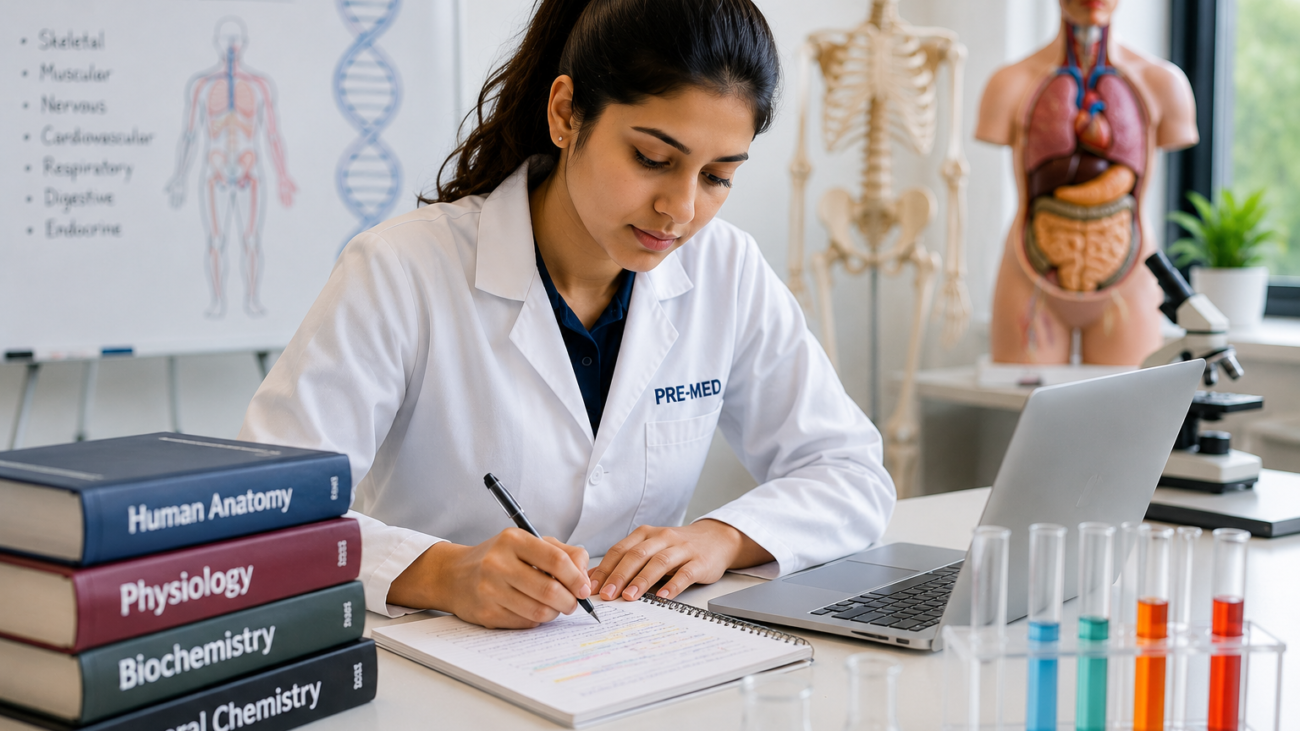
Pre-Med Curriculum Explained: What Courses Will You Actually Take?
Pre-med isn’t a purely theoretical program. Lab sessions — chemistry lab work, biology dissections or specimen study, and hands-on physiology demonstrations — give students exposure to the kind of practical, evidence-based learning that university science programs also emphasize. This matters because medical schools and further academic programs expect applicants to already be comfortable with lab protocols, data recording, and basic scientific method.
Study Skills and Academic Preparation
A less obvious but genuinely important part of the curriculum is academic preparation itself: how to read dense scientific material efficiently, how to prepare for standardized, high-stakes exams, and how to manage a course load that moves faster than typical high school science classes. Students coming straight from secondary school often find this transition is the real adjustment — not the content itself, but the pace and independence required to keep up with it.
How the Curriculum Maps to Career Paths
Graduates use a pre-med foundation in a few different directions:
- Building toward further academic study. Because Canadian medical schools require a completed undergraduate degree (typically alongside MCAT scores and a competitive application) for admission, a pre-med diploma works best as a head start on foundational science knowledge before or alongside that degree — not a replacement for it. Prospective applicants should always confirm specific admission requirements directly with individual medical schools.
- Entering allied health fields. The anatomy, physiology, and lab skills built in a pre-med program transfer directly into other healthcare training paths, including programs like Acupuncture or Manual Osteopathy, for students who decide a hands-on clinical career suits them better than the traditional medical school route.
- Strengthening a weak academic transcript. Students who didn’t take strong science courses in secondary school sometimes use a pre-med program to fill that gap before applying to competitive university programs.
What a Typical Week Looks Like
Expect a mix of lecture-based instruction, lab sessions, and independent study time. Because the program is compressed compared to a full degree, the pace is faster — students who thrive tend to be the ones who stay consistent with review rather than cramming before assessments.
Assessment Style: What Exams Actually Look Like
Pre-med coursework typically moves away from simple multiple-choice memorization tests toward assessments that mirror what future science and medical coursework will demand — applying concepts to scenarios, interpreting data, and explaining physiological processes in your own words. Lab reports and practical assessments carry real weight alongside written exams. Students who adapt early to this style of testing, rather than relying purely on memorization, tend to perform more consistently as the program progresses.
Time Management in a Compressed Program
Because a pre-med diploma condenses foundational science into a shorter timeframe than a full degree, time management becomes a genuine skill students need to develop, not just an abstract piece of advice. Successful students typically build a consistent weekly review routine rather than relying on last-minute cramming before exams — reviewing lecture material within a day or two while it’s still fresh dramatically improves retention compared to revisiting it only before a test.
How Instructors Support the Transition
Smaller class sizes typical of career-college programs mean students generally have more direct access to instructors than in large university lecture halls. This matters most in the early weeks, when students are still adjusting to the pace — asking questions in the moment, rather than letting confusion compound over several classes, is one of the most effective habits a new pre-med student can build.
Connecting Pre-Med Knowledge to Real Healthcare Scenarios
The strongest pre-med programs go beyond isolated facts and actively connect coursework to real clinical scenarios — explaining, for instance, not just the structure of th“What will I actually study?” is the first question most students ask before enrolling in a Pre-Med program, and it’s a fair one. Unlike a general science degree, a pre-med diploma is built specifically around the foundational knowledge future medical students, researchers, and healthcare professionals need — without the unrelated electives a full university degree requires.
The Core Science Foundation
Every pre-med curriculum is anchored in the same handful of subjects that medical schools expect applicants to have a solid grip on: human anatomy and physiology, biology, chemistry, and an introduction to biochemistry. These aren’t taught as isolated theory — a well-structured program ties each subject back to how the human body actually functions, so the material sticks rather than becoming something memorized for a test and forgotten.
Anatomy and physiology in particular deserve attention, because they form the mental map students carry into every future healthcare setting — whether that’s a hospital ward, a research lab, or a clinical practice. Students learn body systems (cardiovascular, respiratory, nervous, musculoskeletal, and more) and how they interact, which becomes essential once they’re interpreting patient cases in later training.
Lab and Practical Components
e cardiovascular system, but how that knowledge applies to understanding a patient presenting with chest pain or shortness of breath. This applied framing helps material stick, and it gives students an early, honest preview of how foundational science actually gets used in clinical decision-making later in their careers.
Preparing for What Comes Next
Whether a student’s next step is a full undergraduate degree, an allied health program, or further exploration of career options, the habits built during a pre-med program — consistent review, comfort with lab protocols, and confidence discussing scientific concepts — carry forward directly. Students who leave a strong pre-med foundation with these habits intact, not just a transcript, tend to adapt faster to whatever academic environment comes next.
Choosing the Right Program Fit
Not every pre-med program is structured identically, and prospective students should look closely at how much of the curriculum is lecture-based versus lab-based, class sizes, and instructor clinical backgrounds before enrolling. A program taught by instructors with genuine healthcare experience — not purely academic backgrounds — often gives students a more grounded, applied understanding of how the material connects to real clinical practice down the road.
Frequently Asked Questions
Does a Pre-Med diploma guarantee admission to medical school? No program can guarantee medical school admission. Canadian medical schools set their own competitive requirements, typically including a completed undergraduate degree, MCAT scores, and interviews. A pre-med diploma builds foundational science knowledge that supports that longer journey.
Is the Pre-Med program only useful for students who want to become doctors? No — the science and lab foundation is equally useful for students considering nursing, allied health, research, or other clinical training paths.
How is a career-college Pre-Med program different from university pre-med courses? It’s more compressed and career-focused, without the general education electives a full degree requires, making it a faster way to build core science knowledge.
Where This Fits at Ruhani College
The Pre-Med Program at Ruhani College is designed by instructors with real clinical and academic backgrounds, so students get a grounded, honest introduction to the science that underpins every healthcare career — whether their next step is a university degree or a hands-on clinical program.
Pre-Med Schools in Ontario: What to Consider Before You Choose
Searching for the pre-med school in Ontario will get you a long list of options — but very little guidance on what actually separates a strong program from a mediocre one. Since pre-med isn’t a licensed profession itself but a preparatory step toward further healthcare study or a healthcare-adjacent career, the school depends entirely on what you’re preparing for. Here’s how to actually evaluate your options.
What a Pre-Med Program Is (and Isn’t)
A pre-med program at a career college is designed to build foundational knowledge in the sciences and healthcare concepts that support further study or entry into healthcare-related roles. It’s not the same as a university pre-medicine track aimed specifically at medical school admission — career college pre-med programs are typically more practical and career-focused, often serving as a stepping stone toward healthcare career paths, further diploma study, or roles supporting clinical environments.
Understanding this distinction matters before you start comparing schools, since the right fit depends on whether your goal is eventual medical school application, entry into an allied health career, or building a strong science foundation before deciding on a specific path.
What to Actually Look for in a Pre-Med Program
Rather than chasing a ” schools” ranking, evaluate programs against these criteria:
Curriculum Depth and Relevance
Look closely at what’s actually taught — biology, chemistry, anatomy and physiology, and healthcare systems coursework should form the core. Ask for a full course list, not just a program description, and compare it against what you’d need for your specific next step, whether that’s a diploma program, further study, or direct entry into a healthcare-adjacent role.
Class Size and Instructor Access
Smaller class sizes generally mean more direct access to instructors, more opportunity for questions, and better support if you’re struggling with a particular concept. Ask prospective schools directly about average class size and how accessible instructors are outside of scheduled class time.
Clinical or Practical Exposure
Some pre-med programs include shadowing opportunities, guest lectures from healthcare professionals, or exposure to clinical settings. This kind of practical context can help confirm whether a healthcare career path is genuinely the right fit before you commit to further, more specialized training.
Pathway Support
A strong program should have clear guidance on what comes next — whether that’s a defined pathway into one of the school’s other healthcare diploma programs, support with university transfer applications, or career counselling for healthcare-adjacent roles. Ask directly what percentage of graduates move into further study versus direct employment, and in what fields.
Faculty Background
Instructors with genuine healthcare or clinical backgrounds bring real-world context to coursework that purely academic instructors often can’t. Ask about instructor credentials and experience during your school research.
Questions to Ask Before Enrolling
When comparing pre-med programs, bring these questions to every school you’re considering:
- What does the full course curriculum actually cover, in detail?
- What percentage of graduates go on to further healthcare study, and in what programs?
- Is there any clinical shadowing, guest lecture series, or practical exposure built into the program?
- What support exists for figuring out your specific next step after graduation?
- What are typical class sizes, and how accessible are instructors outside class time?
A school that can answer these clearly and specifically — rather than with vague marketing language — is usually a stronger sign of program quality than any informal list.
In-Person vs. Online Study Options
Many pre-med programs in Ontario now offer both in-person and online or hybrid delivery formats, and this choice can meaningfully affect your experience:
In-person study generally offers more direct lab access, easier informal interaction with instructors and classmates, and a more structured routine — which can help students who benefit from a defined schedule and hands-on lab components.
Online or hybrid study offers more flexibility for students balancing work, family commitments, or other responsibilities, though it requires strong self-discipline and comfort with independent study. If a program offers hybrid delivery, ask specifically how lab components and any hands-on coursework are handled remotely versus in person.
Neither format is inherently better — the right choice depends on your learning style, schedule constraints, and whether the program’s specific lab or practical components translate well to your preferred format.
Common Mistakes When Choosing a Pre-Med Program
- Choosing based on program name alone. “Pre-Med” means different things at different schools — always verify the actual curriculum, not just the title.
- Not clarifying your end goal first. A program built for direct entry into allied health careers looks different from one designed as a university transfer pathway — know which one you need before comparing schools.
- Ignoring pathway support. A program with no clear guidance on “what’s next” can leave you without a plan after graduation, even with strong grades.
- Overlooking class size and instructor access. Larger cohorts can mean less individual support exactly when foundational science courses get difficult.
Is Pre-Med the Right Starting Point for You?
A pre-med program tends to be a strong fit if you:
- Know you want a healthcare-related career but aren’t yet certain which specific path (RMT, Acupuncture, Osteopathy, or further study) is right for you
- Want to strengthen your science foundation before committing to a specialized diploma
- Are considering university transfer toward medical school or another advanced healthcare program and want a strong preparatory foundation first
If that sounds like where you’re at, the next step is talking directly with a program advisor who can walk you through curriculum specifics and realistic next-step pathways — not just a program brochure.
Ready to see the full Pre-Med curriculum and pathway options? Book a campus tour at Ruhani College and speak with our program advisors about what comes after pre-med, based on where you want to end up.
Frequently Asked Questions
Is a career college pre-med program the same as a university pre-medicine track? No. Career college pre-med programs are typically more practical and career-focused, often serving as preparation for allied health diploma programs or further study rather than a direct medical school admission pathway.
Do I need strong science grades to enroll in a pre-med program? Requirements vary by school, but most pre-med programs are designed to build foundational science knowledge, so they can be a good starting point even if your science background isn’t extensive yet.
What can I do after completing a pre-med program? Common next steps include enrolling in a specialized healthcare diploma program, pursuing further academic study, or transitioning into a healthcare-adjacent role, depending on the pathway support your program offers.
How do I know if a pre-med program is good quality? Look past marketing language and ask for specifics: full curriculum details, instructor credentials, clinical exposure opportunities, and clear data on where graduates typically go next.
Related reading: Is a Pre-Medical Program the First Step for Your Healthcare Career?
7 Effective Study Strategies for Adult Learners and Career College Students
Returning to school as an adult can be both exciting and challenging. Many mature students balance coursework with employment, family responsibilities, and other commitments, making effective study strategies essential for academic success.
The good news is that academic performance is not simply determined by intelligence or natural ability. Research in educational psychology consistently shows that effective study strategies have a significant impact on learning, retention, and long-term success.
The following evidence-based techniques can help adult learners maximize their study time and improve academic outcomes.
Move Beyond Passive Studying
Many students spend hours reading textbooks, highlighting notes, and reviewing course materials. While these activities can be useful as part of a study plan, they are often insufficient on their own.
Research has shown that passive review can create a false sense of familiarity with content without improving long-term retention. Students may recognize information while reading but struggle to recall or apply it during tests, assignments, or workplace situations.
Instead, learners should focus on active engagement with course material by asking questions, summarizing concepts in their own words, and testing their understanding regularly.
Use Active Recall to Improve Retention
One of the most effective learning strategies is active recall.
Rather than repeatedly reading notes, students attempt to retrieve information from memory without looking at their materials. This process strengthens memory pathways and improves long-term retention.
Examples of active recall include:
- Answering practice questions
- Completing quizzes
- Using flashcards
- Explaining concepts aloud
- Writing summaries from memory
Research consistently demonstrates that active recall produces better learning outcomes than passive review techniques.
Practice with Multiple Question Formats
Successful students do not rely on a single type of practice material.
Exposure to a variety of question formats helps learners develop a deeper understanding of concepts and improves their ability to apply knowledge in different contexts.
Effective practice materials may include:
- Multiple-choice questions
- Short-answer questions
- Case studies
- Scenario-based exercises
- Written assignments
- Practical applications
This approach is particularly valuable in career-focused education, where students must demonstrate both theoretical knowledge and practical problem-solving skills.
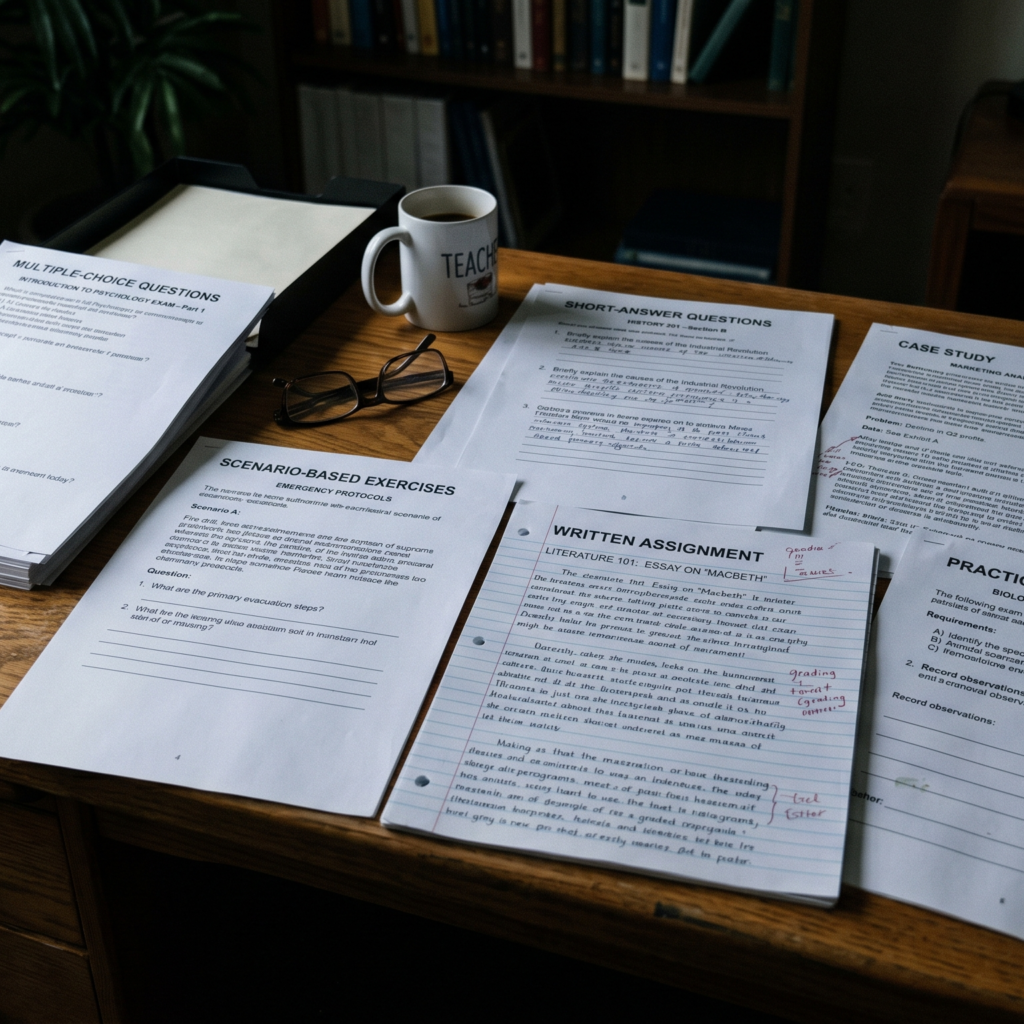
Focus on One Concept Through Repeated Application
When students encounter challenging topics, the solution is often not more reading but more application.
Working through multiple questions related to a single concept helps learners identify gaps in understanding and view the material from different perspectives.
For example, rather than reviewing the same notes repeatedly, students should solve a variety of problems that require them to apply the concept in different situations.
This process builds confidence, strengthens critical thinking skills, and promotes deeper understanding.
Apply Spaced Repetition
One of the most widely supported findings in learning science is the spacing effect.
Information is more likely to be retained when reviewed at intervals over time rather than studied intensively in a single session.
A simple spaced repetition schedule may involve:
- Reviewing material shortly after class
- Revisiting it the following day
- Reviewing again several days later
- Testing knowledge periodically over subsequent weeks
This method reduces forgetting and improves long-term retention.
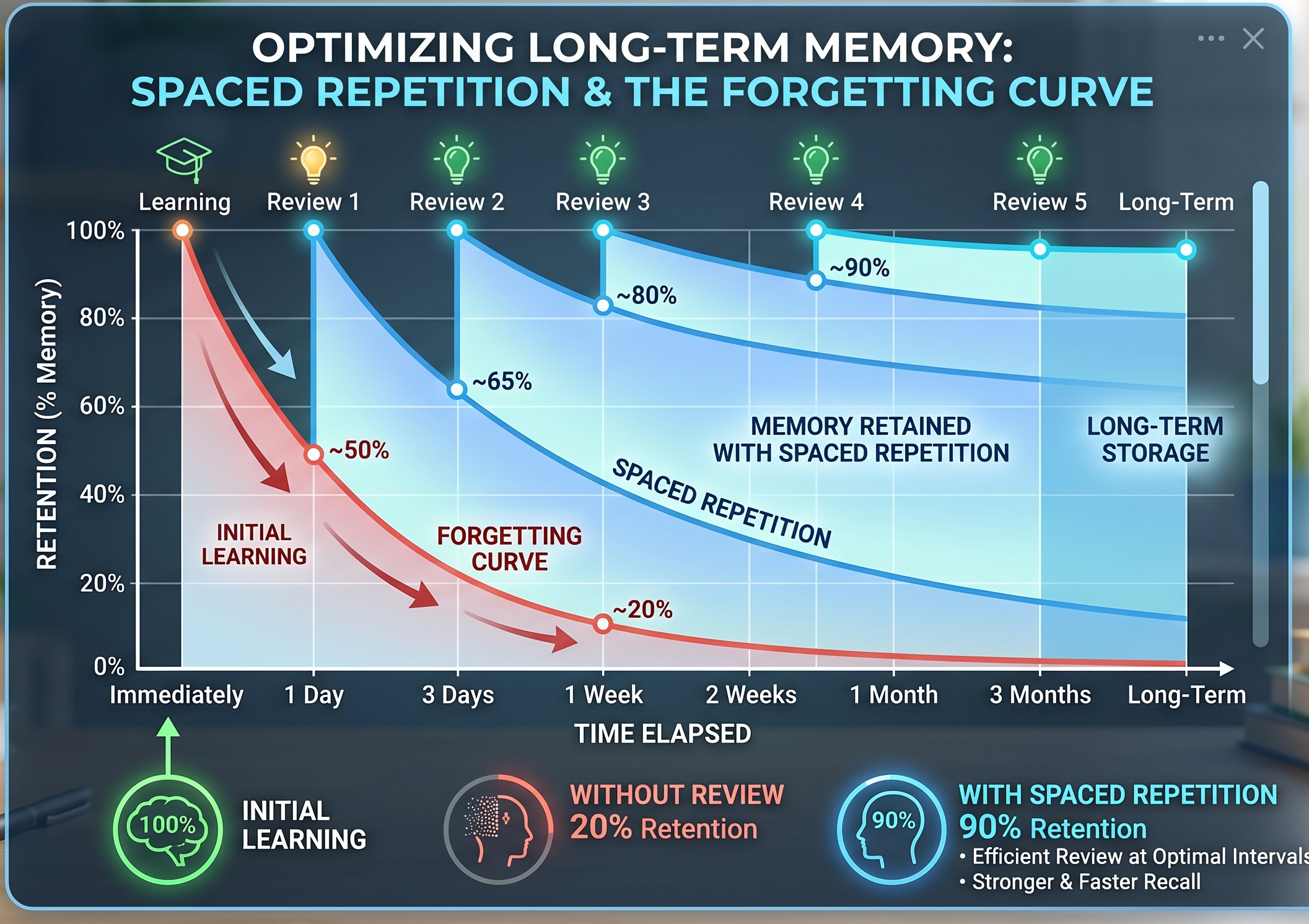
Prepare Before Class
Pre-class preparation can significantly improve learning outcomes.
Students who review lecture materials, readings, or introductory resources before class often find it easier to follow instruction and engage with complex topics.
Even a brief review session can provide important context, allowing learners to focus on understanding rather than trying to absorb entirely new information for the first time.
For busy adult learners, 15 to 20 minutes of preparation before a class can improve comprehension and reduce study time later.
Make Learning Flexible
Many adult learners must balance their studies with work and family commitments. As a result, flexibility becomes an important part of academic success.
Effective students often take advantage of small pockets of time throughout the day by:
- Reviewing flashcards during commutes
- Listening to educational content while travelling
- Completing short study sessions between responsibilities
- Using mobile learning tools to reinforce concepts
Consistency is often more important than lengthy study sessions.
Study Smarter, Not Longer
Academic success is rarely the result of simply spending more hours studying. Instead, it depends on using proven learning strategies that improve understanding, retention, and application.
For adult learners and career college students, the most effective study techniques include:
- Active recall
- Practice questions
- Multiple question formats
- Spaced repetition
- Pre-class preparation
- Consistent review habits
By adopting evidence-based learning strategies, students can make better use of their study time, improve academic performance, and build the knowledge and skills needed for long-term career success.